A $265 Million Building With One Job: Buy Time
The Warehouse That Doesn’t Warehouse
Picture a building the size of twenty-one football fields whose only function is patience.
That’s the Houston Receive Center. Target opened it this spring at a cost of $265 million, spanning 1.2 million square feet, and it doesn’t pick orders. It doesn’t run store replenishment the way a classic distribution center does.
It does one thing: it holds inventory between the vendor and the network, and releases it downstream when the six regional distribution centers and one flow center it feeds are actually ready to receive it.
Goods arrive. They wait until the network calls for them. They move on Target’s schedule instead of the vendor’s or the port’s. That’s the entire function, and Target built out more than a million square feet to make it reliable.
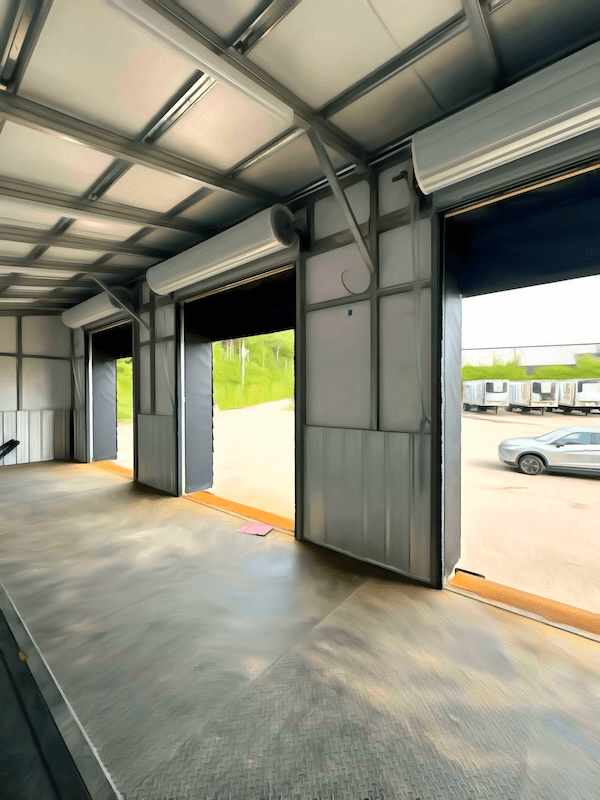
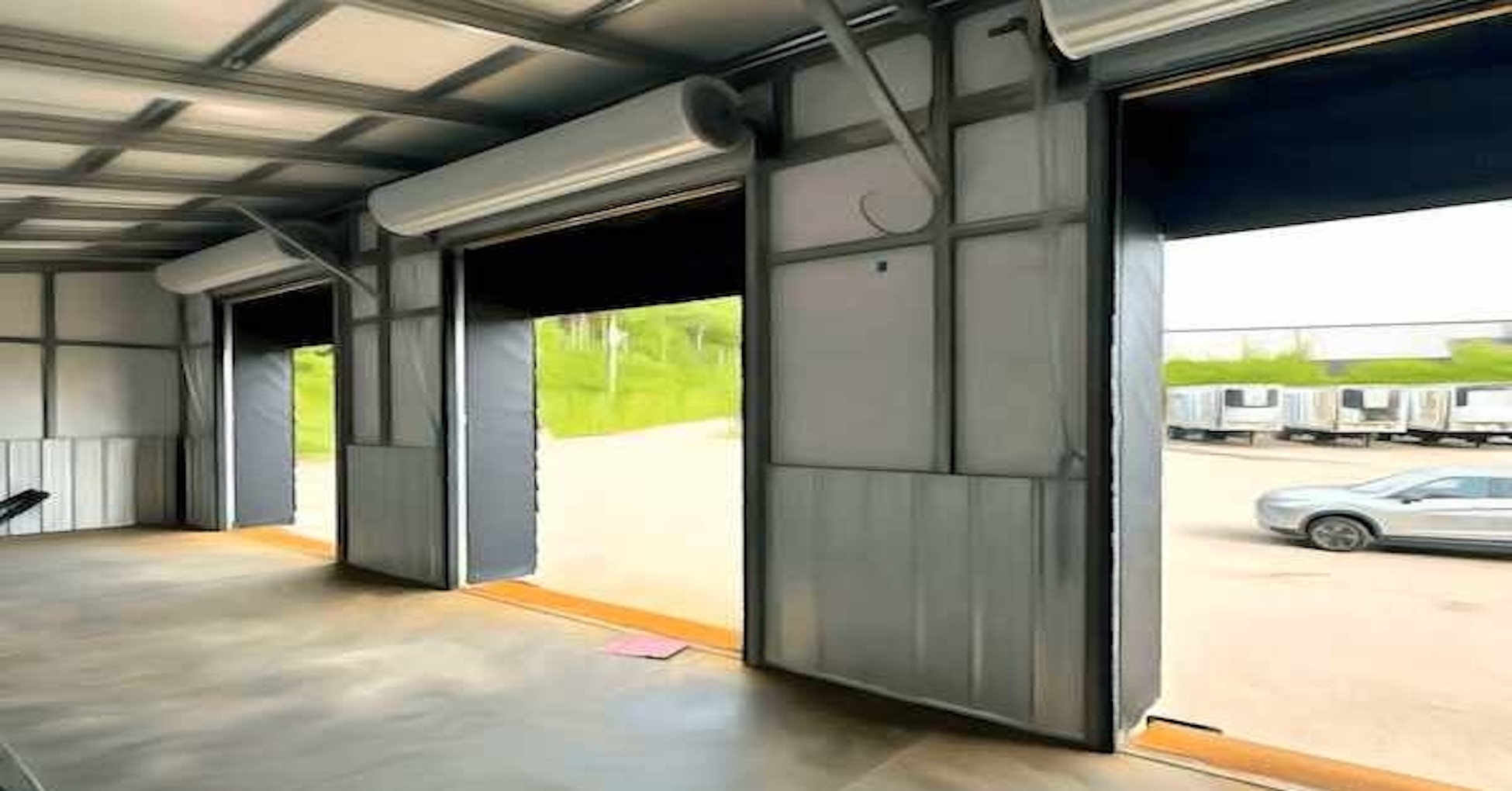
Between trucks: dock doors open to the yard at YRG’s newest cross-docking platform project in Massachusetts.
This Isn’t a Real Estate Story
It’s tempting to read the Receive Center as a facilities decision. Bigger footprint, more capacity, another place on the map. But the real story is a network design decision, and it’s one every C-level supply chain leader should sit with, whether their budget looks anything like Target’s or not.
A dedicated buffer between receiving and distribution changes the physics of a network. It absorbs the swings that come off the ports. It smooths labor peaks instead of letting them slam into a single facility. It keeps distribution centers doing distribution center work instead of being overwhelmed with inbound volume they aren’t staffed to handle. Target’s own materials point to exactly this: the facility exists to hold seasonal, bulky, or hard-to-forecast inventory until the moment the network can actually use it, so DCs and store backrooms don’t get overcrowded in the meantime.
That capability matters more this year than it did five years ago, because the pressure points keep stacking. Volume variability keeps climbing. Carrier capacity keeps swinging. Appointment scheduling at receiving docks keeps getting harder to win. Demurrage risk sits on every container that can’t move the moment it lands. Networks aren’t failing because the people running them aren’t good at their jobs. They’re failing because the network has no slack built into it anywhere, and there’s nowhere for volume to go when timing doesn’t cooperate.
Target just bought slack at scale. The headline isn’t whether a $265 million receiving facility was the right call for a retailer with Target’s volume. It clearly was. The headline is that the model itself works: dedicated buffer inventory between inbound and outbound is a legitimate competitive advantage, not a nice-to-have.
The Same Capability, Without the Custom Warehouse
For those who are not running a $100 billion retailer? Most operators can’t spend $265 million on a fixed facility. Most can’t build a first-of-its-kind facility with a custom warehouse management system and a simulation-driven design process behind it. And fewer can afford to bet an entire network strategy on one site in one metro.
But the underlying need doesn’t shrink just because the budget does. A 3PL managing volatile client volume needs buffer capacity. A regional distributor absorbing seasonal freight swings needs it too. The pressure Target is solving for at the macro level shows up on a much smaller balance sheet in exactly the same shape: too much inbound, not enough controlled release, and a yard or dock that turns into a parking lot every time the timing slips.
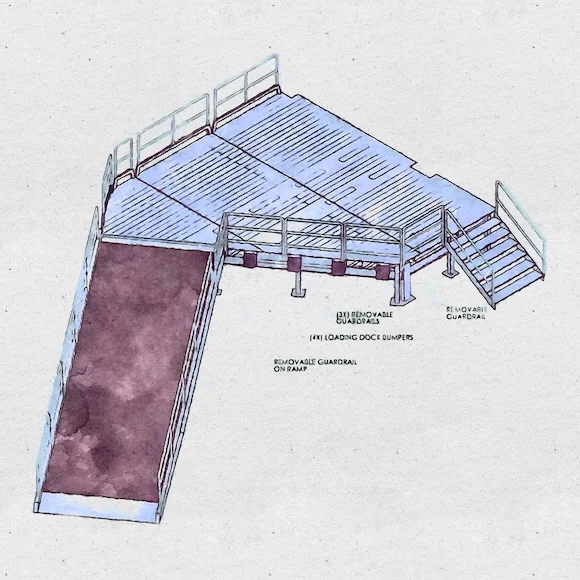
This is precisely the gap modular cross-docking platforms are built to close. The concept is the same one Target just spent a quarter billion dollars validating: hold buffer inventory between inbound and outbound, stage it, and release it to the next leg of the network when that network is actually ready. The difference is how you get there. A modular platform ships to your site, gets installed, and does its job without a construction timeline attached to it. When your network’s shape changes, so can the platform’s location.
Worth being precise here, because the terms get used loosely. Classic cross-docking is a velocity play: goods move from inbound trailer to outbound trailer with barely any dwell time, closer to what Target’s flow center is built to do. A Receive Center is the opposite instinct: it holds inventory on purpose, until the downstream network is ready for it. A modular cross-docking platform can run either way, fast-turn staging when the goal is speed, longer holds when the goal is absorbing volatility. A fixed DC can flex inside its own walls, re-slot the fast movers up front, re-rack for a new mix. What it can’t do is flex the walls. It can’t add capacity where the surge actually lands, and it can’t move when the network’s center of gravity shifts. A modular platform can be trucked in where the volume is, and pulled when it moves on.
That’s the modular cross-docking platform work we do at The Yard Ramp Guy. We ship it. We offload it. We install it. You focus on running your operation instead of managing a build.
The Right Scale for the Same Idea
Target is solving this problem at the macro level, and the rest of the market, from regional 3PLs to mid-size distributors to enterprise operators still relying on ad hoc yard space, wins by solving the same problem at the right scale for their own network. One modular platform at a time. One smoother week at a time. One fewer fire drill at the dock.
The networks that build in room to breathe are the ones that move faster, safer, and cheaper than the ones that don’t. Target just put a number on what that room to breathe is worth. The strategy scales down a lot further than $265 million, and it doesn’t require anyone to break ground to get it.
Read Target’s original announcement on the Houston Receive Center here.