The Clock Is Already Running
Why Cross-Dock Platforms Are Rewriting the Rules of Distribution.
Your customers don’t care about your delivery schedule. They care about theirs.
That’s not a criticism. It’s the new competitive reality, and it’s reshaping how the smartest warehouse operators are thinking about their infrastructure. The companies moving fastest right now aren’t the ones with the biggest footprints or the longest vendor relationships. They’re the ones that figured out how to compress the time between “we need it” and “it’s here.”
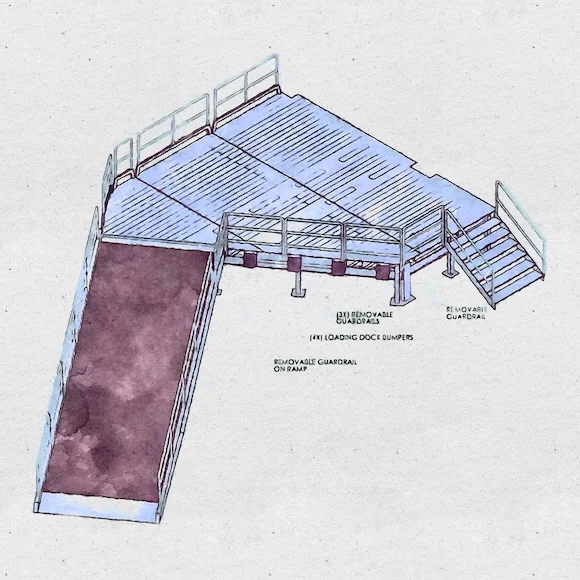
Cross-dock platforms are central to that shift.
In a traditional distribution model, inventory arrives, gets shelved, waits for a scheduled outbound run, and eventually reaches the customer. The rhythm is set by the distributor. It works, until a competitor offers something better.
A well-implemented cross-dock system breaks that rhythm in the best possible way. Product comes in, gets sorted and staged, and goes back out, often within 24 hours or less, without ever settling into storage. The platform becomes a transfer point rather than a holding tank. And when you can move product that fast, you stop being a vendor on a schedule and start being a resource customers can actually rely on.
That’s a meaningful distinction. Customer expectations around delivery speed have been recalibrated by e-commerce, and those expectations have migrated into B2B relationships. The warehouse operator who can promise 24-hour fulfillment cycles is playing a different game than one still operating on a twice-weekly route.
The disruption potential here is real. Companies that deploy cross-dock capability early create a structural advantage that’s genuinely hard to replicate quickly. Infrastructure, workflow redesign, staff training, carrier relationships — none of that happens overnight. Which means the window to get ahead of your competitors isn’t permanently open.
The operational case is just as strong as the competitive one. Reduced dwell time means lower carrying costs, better inventory visibility, and less exposure to product that sits too long and loses value. The platform pays for itself in ways that show up across the P&L, not just in the customer satisfaction column.
The question isn’t whether cross-docking belongs in your distribution strategy. For most operations with volume and velocity demands, it does.
The question is whether you move first…or spend the next few years watching someone else own the advantage.